The Blueprint for Automating Financial Operations: Deploying a Cloud-Based Enterprise Accounting Solution
Solution Highlights
- Manual financial tracking is a massive operational bottleneck that leads to revenue leaks and compliance failures.
- Deploying a pre-built enterprise accounting architecture eliminates the need for expensive, recurring software subscriptions.
- Digital agencies and founders can white-label this architecture to launch their own highly profitable “Accounting-as-a-Service” (AaaS) SaaS platform.
- Professional end-to-end cloud provisioning, data security hardening, and brand integration make this solution launch-ready in days.
In today’s hyper-competitive digital economy, relying on fragmented spreadsheets and manual data entry to manage company finances is no longer a viable business strategy. Disconnected financial systems lead to critical reporting delays, cash flow blind spots, and costly human errors. For a business to scale effectively, its financial core must be entirely automated.
Historically, achieving this level of operational efficiency meant locking into rigid, expensive legacy ERPs (Enterprise Resource Planning systems) with exorbitant monthly per-user licenses. However, a profound shift is occurring in the software landscape. Forward-thinking enterprises, digital agencies, and entrepreneurial founders are now acquiring full ownership of their operational infrastructure.
By leveraging robust, turnkey frameworks, businesses can deploy their own proprietary cloud accounting systems. This strategy not only automates internal operations but also opens a highly lucrative avenue to launch customized SaaS products for external clients.
Table of Contents
The Automation Imperative: Why We Recommend This Architecture
When selecting the financial backbone for your business—or the core product for your next FinTech startup—the underlying architecture must be secure, scalable, and relentlessly accurate. We highly recommend utilizing the eAccount architecture to fulfill these rigorous demands.
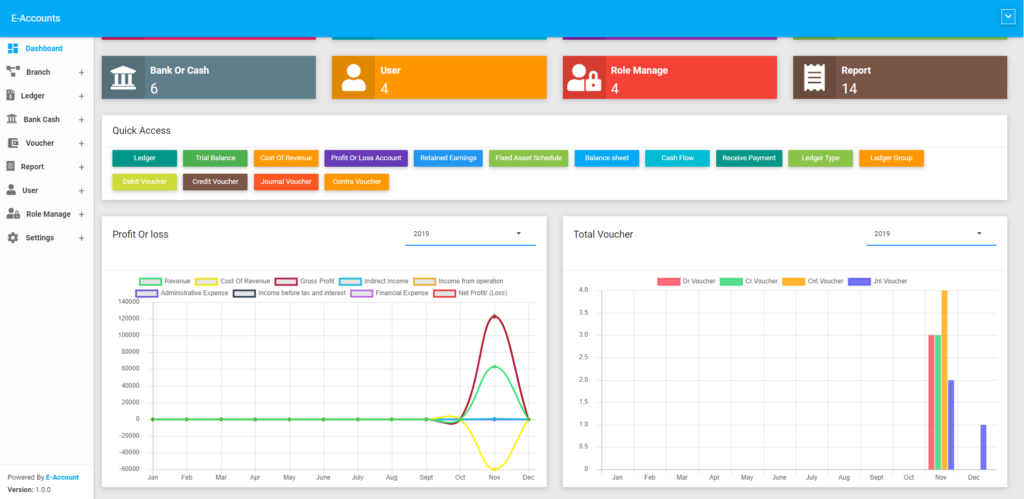
This solution serves as a comprehensive, double-entry accounting framework designed to centralize all financial operations. Instead of bouncing between an invoicing tool, a separate expense tracker, and a third-party payroll calculator, this application brings every financial touchpoint under one unified, real-time dashboard.
This solution is engineered to act as an invisible financial controller. It automates repetitive administrative burdens, instantly reconciles ledgers, and guarantees that management always has an accurate, up-to-the-minute pulse on the organization’s financial health.
Inside the Operational Engine: Core Business Utilities
A true enterprise accounting solution goes far beyond basic income and expense tracking. This framework is equipped with deeply integrated modules designed to automate complex corporate finance workflows.
1. Automated Double-Entry Ledger System
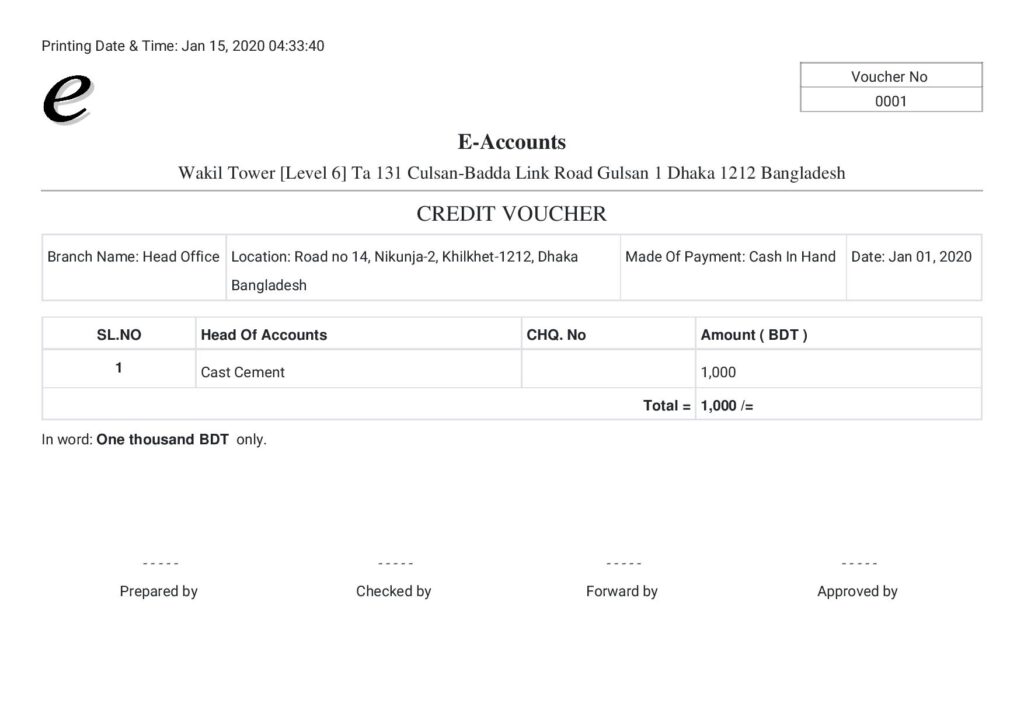
At the heart of the platform is a strict, universally compliant double-entry accounting engine. Every financial transaction is automatically cross-referenced, ensuring complete balance sheet integrity.
- Chart of Accounts: Highly customizable asset, liability, equity, income, and expense categorizations tailored to specific industry requirements.
- Instant Trial Balances: Generate error-free trial balances and profit/loss statements with a single click, completely removing the end-of-month reconciliation panic.
- Multi-Branch & Departmental Tracking: Perfect for holding companies or agencies with multiple client portfolios. Track distinct cost centers independently while maintaining a unified corporate overview.
2. Smart Invoicing & Receivables Automation
Cash flow is the lifeblood of any organization. This solution accelerates cash collection by completely automating the accounts receivable lifecycle.
- Dynamic Quote-to-Invoice Workflows: Seamlessly convert approved client estimates directly into actionable tax invoices without re-entering data.
- Automated Payment Gateways: Integrate digital payment links directly into invoices, allowing clients to settle their accounts instantly via secure merchant gateways.
- Recurring Billing: Ideal for agencies and SaaS companies, the system can automatically generate and dispatch recurring retainer invoices on scheduled intervals.
The SaaS Opportunity: Launching Accounting-as-a-Service (AaaS)
While this architecture is a phenomenal internal tool, its greatest ROI potential lies in its commercialization capabilities. For digital agencies, web developers, and ambitious founders, this script serves as the perfect foundation to launch a profitable FinTech SaaS.
Because the platform supports multi-user role management and distinct branch/company profiles, an agency can easily white-label this software and offer “Accounting-as-a-Service” to their existing SMB client base. Instead of clients paying premium fees to massive corporate software giants, they pay a monthly subscription directly to your agency for access to a beautifully branded, managed financial portal.
Transforming Source Code into a Secure Business Asset
Procuring a high-end financial script is a brilliant strategic move, but raw code alone does not equal a functional business. Deploying an ERP that handles sensitive corporate financial data requires enterprise-grade server environments, bulletproof database security, and meticulous application configuration.
A single oversight in database provisioning, server firewalls, or SSL encryption could expose an entire company’s financial history to catastrophic vulnerabilities.
The Turnkey Implementation Protocol
Deploying complex SaaS architectures into fully operational, launch-ready business applications requires deep technical expertise. Having a dedicated implementation partner removes the technical friction entirely, allowing founders to focus on scaling operations and driving revenue.
When deploying a financial automation solution, a rigorous, end-to-end implementation protocol includes:
- Secure Cloud Provisioning: The application must be deployed on isolated, high-performance cloud environments (such as AWS or DigitalOcean) optimized for speed and maximum data security.
- Database Hardening & Backups: Financial data is critical. Secure relational databases must be configured, and automated, encrypted daily backup protocols implemented to ensure absolute data integrity.
- Brand White-Labeling & UI Customization: Generic aesthetics are stripped away to inject distinct corporate colors, custom typography, and company logos so the software feels like a proprietary, in-house asset.
- Workflow Automation Integration: This includes configuring the necessary SMTP mail servers for transactional emails, setting up cron jobs for automated reporting, and integrating required payment gateway APIs.
Whether you are implementing this architecture to streamline your own corporate operations, or launching it as a branded FinTech SaaS to disrupt the market, utilizing professional deployment and automation expertise guarantees a frictionless, secure, and rapid launch.